Fill Invoice
FREE INVOICE GENERATOR
How Virtual Try-Ons Are Changing Product Sales

Posted On 2025-12-10
Technology Behind Virtual Try-Ons
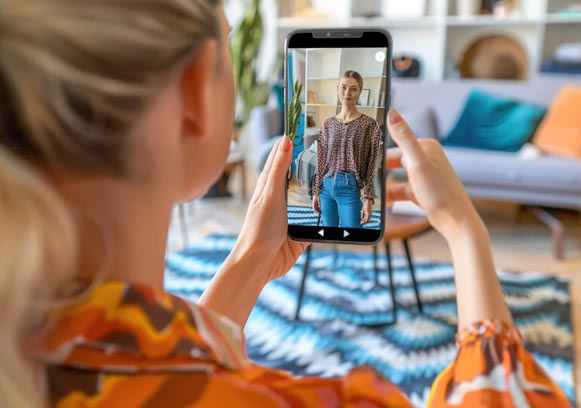
Virtual try-ons leverage a combination of augmented reality, computer vision, and AI algorithms to create realistic simulations of products on a user's body or face. Using the camera on a smartphone, tablet, or webcam, the system maps facial features, body dimensions, or hand movements in real-time, overlaying the selected item to show how it would look.
Additionally, many virtual try-on systems integrate with e-commerce platforms, allowing seamless transitions from exploration to purchase. Some retailers also embed virtual fitting rooms that allow shoppers to mix and match items or adjust product sizes, enhancing personalization.
Benefits for Retailers and Consumers
Virtual try-ons offer numerous benefits that positively impact both retailers and consumers. For retailers, one of the primary advantages is an increase in conversion rates. When customers can virtually try a product and see how it fits or looks, they are more likely to complete the purchase.
This technology also significantly reduces return rates, which are costly for online retailers. By providing a clearer understanding of the product before purchase, virtual try-ons help ensure customers receive items that meet their expectations, minimizing dissatisfaction and costly reverse logistics.
Moreover, virtual try-ons enhance the overall shopping experience by adding an element of interactivity and personalization. Customers can engage more deeply with the brand, which fosters loyalty and repeat purchases. This technology also appeals to younger, tech-savvy demographics who appreciate innovation.
Additional Consumer Advantages
Another notable benefit is accessibility. Virtual try-ons allow people with mobility issues or those who feel uncomfortable shopping in-store to explore products without physical constraints.
Consumers also benefit from educational opportunities. Virtual try-ons can include tutorials or tips integrated within the experience, such as makeup application guides or style recommendations, enriching the user experience.
This technology encourages exploration and experimentation. Customers may be more willing to try new styles or products they wouldn't consider without seeing how it looks on them virtually.
Challenges in Implementing Virtual Try-Ons
Technical Limitations: Developing accurate and realistic virtual try-ons requires substantial investment in technology, including AR development and 3D modeling, which can be costly and time-consuming.Device Compatibility: Not all customers have access to devices that support advanced AR experiences, which can limit reach and inclusivity.Privacy Concerns: Since virtual try-ons rely on camera access and personal data, ensuring robust privacy and data security measures is essential to maintain customer trust.Integration Complexity: Seamlessly integrating virtual try-on technology with existing e-commerce systems and inventory management can pose logistical challenges.User Adoption: Some customers may be hesitant to adopt new technologies or find virtual try-ons difficult to use, requiring intuitive design and education to overcome barriers.
Successful Examples of Virtual Try-On Adoption
In cosmetics, brands use virtual try-ons to let customers test different makeup shades and looks without physically applying products. This reduces product waste and encourages experimentation, resulting in higher purchase confidence.
Fashion retailers incorporate virtual fitting rooms where shoppers can try on clothes virtually to check fit and styling. Some systems even allow users to input their measurements for enhanced accuracy.
These examples highlight the versatility and effectiveness of virtual try-ons across product categories, driving sales and enhancing brand experiences.
The Future of Virtual Try-Ons in Retail
The future of virtual try-ons looks promising, with ongoing advancements in AR, AI, and 5G connectivity set to make these experiences even more immersive and accessible. As technology improves, virtual try-ons will become more realistic, responding instantly to nuanced movements and lighting changes.
Personalization will continue to evolve, with AI recommending products based on customer preferences, past purchases, and virtual try-on behavior, creating highly tailored shopping journeys.
Retailers are expected to expand virtual try-ons to more product categories, including footwear, jewelry, and even home decor, allowing customers to visualize how products fit into their lifestyle and environment.
Additionally, as sustainability becomes a greater concern, virtual try-ons can help reduce waste by minimizing returns and encouraging thoughtful purchasing decisions.
Conclusion: Virtual Try-Ons as a Catalyst for E-Commerce Growth
Virtual try-ons are revolutionizing product sales by addressing the key challenges of online shopping: uncertainty and lack of tactile experience. By enabling customers to visualize products on themselves in real time, this technology enhances confidence, reduces returns, and drives engagement.
Looking ahead, virtual try-ons will become an integral part of the e-commerce ecosystem, blending technology and personalization to create seamless, enjoyable, and sustainable shopping experiences.
Brands that invest in this innovation today will be well-positioned to meet evolving consumer expectations, foster loyalty, and gain competitive advantage in an increasingly digital marketplace.


Popular Posts
June 2026


Building a Community Online Without Feeling Overwhelmed
Creating and nurturing an online community can be a game-changer for .. ..
Creating and nurturing an online community can be a game-changer for small businesses. A strong community fosters loyal customers, encourages .. ..
READ NOW


How to Optimize Paid Advertising for Maximum ROI in 2025
Paid advertising in 2025 is evolving rapidly with the rise of .. ..
Paid advertising in 2025 is evolving rapidly with the rise of automation, AI, and increased data privacy regulations. Marketers are .. ..
READ NOW


From Milestone to Meh: The Strange Psychology of Wins
Successes and wins, whether big or small, are often anticipated as .. ..
Successes and wins, whether big or small, are often anticipated as moments of triumph and celebration. Yet, for many people, .. ..
READ NOW


Celebrating Wins and Planning for Long-Term Success
Recognizing and celebrating wins, no matter how big or small, is .. ..
Recognizing and celebrating wins, no matter how big or small, is crucial to maintaining motivation and fostering a positive environment. .. ..
READ NOW


Using Chatbots to Improve Customer Support and Sales
In the evolving digital landscape, businesses are constantly seeking ways to .. ..
READ NOW


5 Personal Finance Hacks That Make Investing Easier for Beginners
Investing can seem daunting for beginners, often clouded with complex jargon, .. ..
READ NOW

Using Marketing Automation to Streamline Strategy Execution
Marketing automation refers to the use of software platforms and technologies .. ..
READ NOW


Waste Not: Sustainable Product Design for Startups
In today's rapidly evolving market, startups have a unique opportunity to .. ..
READ NOW


4 Free Marketing Channels Every Beginner Should Try
Marketing is essential for any business, but for beginners, the cost .. ..
READ NOW


How Hybrid Finance Is Shaping the Future of Entrepreneurial Funding
Entrepreneurial funding has experienced a significant transformation in recent years, driven .. ..
READ NOW


