Fill Invoice
FREE INVOICE GENERATOR
Using Drones And Autonomous Vehicles For Faster Shipping

Posted On 2025-12-18
How Drones Are Disrupting Last-Mile Delivery
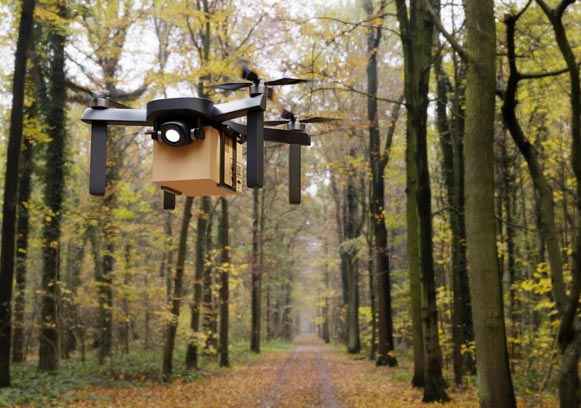
Drones, also known as Unmanned Aerial Vehicles (UAVs), are playing a significant role in reshaping the final leg of the delivery process. Traditionally, last-mile delivery has been both costly and inefficient due to traffic, fuel usage, and labor constraints. Drones address these challenges by flying directly to the customer's location, bypassing road congestion and human delays.
Additionally, drones are environmentally friendly. They run on batteries and produce minimal emissions, making them a greener alternative to traditional delivery trucks. As battery technology improves, their flight range and payload capacity are expected to expand, making them suitable for more complex deliveries in the near future.
The Rise of Autonomous Ground Vehicles
While drones handle the skies, autonomous ground vehicles (AGVs) are transforming on-the-road deliveries. These self-driving machines use sensors, cameras, and artificial intelligence to navigate roads, detect obstacles, and interact with their environment. They are particularly effective in urban neighborhoods and gated communities where deliveries are frequent and routes predictable.
AGVs reduce operational costs significantly. By removing the driver from the equation, companies save on wages, insurance, and human error. These vehicles can also work longer hours without fatigue, enabling night-time and 24/7 delivery services that enhance customer satisfaction and business scalability.
Over time, as AGV technology becomes more affordable, smaller businesses will also be able to adopt these systems. With AI and machine learning integrations, AGVs are continuously improving their route optimization and decision-making capabilities, pushing the boundaries of autonomous logistics.
Their potential doesn't stop at deliveries-AGVs may soon integrate with warehouses and inventory systems, streamlining the entire supply chain from shelf to doorstep in a fully automated process.
Challenges Facing Drone and AV Implementation
Another concern is safety. Both drones and AVs must be able to navigate unpredictable environments-such as birds in the air or children playing on sidewalks. Developers must ensure these machines can respond accurately and quickly to avoid accidents or damages, especially in densely populated areas.
Cybersecurity is also a significant issue. As these delivery tools are connected to the internet and rely heavily on data, they are vulnerable to hacking or data breaches. A compromised drone or AV could pose serious security and privacy risks, making investment in strong encryption and software defenses essential.
Public perception may also act as a barrier. Many consumers remain skeptical about packages arriving via flying machines or robots without supervision. Gaining trust through transparency, reliability, and education will be crucial for long-term adoption.
Advantages of Drone and AV Shipping Systems
Speed: Drones can bypass traffic, and AVs can run continuously, reducing average delivery times significantly.Cost Efficiency: Reduced labor, fuel, and maintenance expenses make drone and AV deliveries more economically viable in the long term.Environmental Benefits: Battery-powered systems contribute to lower carbon emissions and cleaner air in cities.Improved Accessibility: Enables delivery to isolated or under-served regions where traditional services are inefficient.Scalability: Technology-driven systems allow for rapid scale without proportional increases in human resources.
Real-World Use Cases and Industry Leaders
Amazon Prime Air: Amazon's drone program aims to deliver small packages within 30 minutes in suburban neighborhoods.UPS Flight Forward: Uses drones to deliver healthcare items and has received FAA certification for drone airline operations.Nuro: A leader in autonomous ground vehicles, focusing on food, grocery, and parcel delivery in urban areas.Wing (by Alphabet): Provides drone delivery services in the U.S., Australia, and Finland, handling thousands of flights.Starship Technologies: Deploys sidewalk delivery robots on college campuses and city streets for food and retail items.
The Future of Autonomous Delivery Systems
Further advancements in artificial intelligence and 5G connectivity will boost responsiveness and coordination. Drones and AVs will be able to make real-time decisions based on traffic, weather, and demand patterns, enhancing performance. This smart delivery network could operate almost independently, needing minimal human input.
Urban design may also adapt to support these systems. Cities might include droneports, charging stations, and AV-only lanes to accommodate the growing use of autonomous delivery tools. Governments and city planners will have to collaborate with tech companies to ensure infrastructure readiness.
Eventually, as adoption increases and public trust grows, consumers will come to expect-and even prefer-automated deliveries. Businesses that embrace this shift early will gain a significant competitive edge in customer satisfaction and logistical efficiency.


Popular Posts
June 2026


Building a Community Online Without Feeling Overwhelmed
Creating and nurturing an online community can be a game-changer for .. ..
Creating and nurturing an online community can be a game-changer for small businesses. A strong community fosters loyal customers, encourages .. ..
READ NOW


How to Optimize Paid Advertising for Maximum ROI in 2025
Paid advertising in 2025 is evolving rapidly with the rise of .. ..
Paid advertising in 2025 is evolving rapidly with the rise of automation, AI, and increased data privacy regulations. Marketers are .. ..
READ NOW


Celebrating Wins and Planning for Long-Term Success
Recognizing and celebrating wins, no matter how big or small, is .. ..
Recognizing and celebrating wins, no matter how big or small, is crucial to maintaining motivation and fostering a positive environment. .. ..
READ NOW


From Milestone to Meh: The Strange Psychology of Wins
Successes and wins, whether big or small, are often anticipated as .. ..
Successes and wins, whether big or small, are often anticipated as moments of triumph and celebration. Yet, for many people, .. ..
READ NOW


Using Chatbots to Improve Customer Support and Sales
In the evolving digital landscape, businesses are constantly seeking ways to .. ..
READ NOW


5 Personal Finance Hacks That Make Investing Easier for Beginners
Investing can seem daunting for beginners, often clouded with complex jargon, .. ..
READ NOW


Using Marketing Automation to Streamline Strategy Execution
Marketing automation refers to the use of software platforms and technologies .. ..
READ NOW


Waste Not: Sustainable Product Design for Startups
In today's rapidly evolving market, startups have a unique opportunity to .. ..
READ NOW


4 Free Marketing Channels Every Beginner Should Try
Marketing is essential for any business, but for beginners, the cost .. ..
READ NOW


How Hybrid Finance Is Shaping the Future of Entrepreneurial Funding
Entrepreneurial funding has experienced a significant transformation in recent years, driven .. ..
READ NOW


