Fill Invoice
FREE INVOICE GENERATOR
Why Retailers Need E-Commerce To Stay Competitive

Posted On 2025-10-11
Expanding Customer Reach
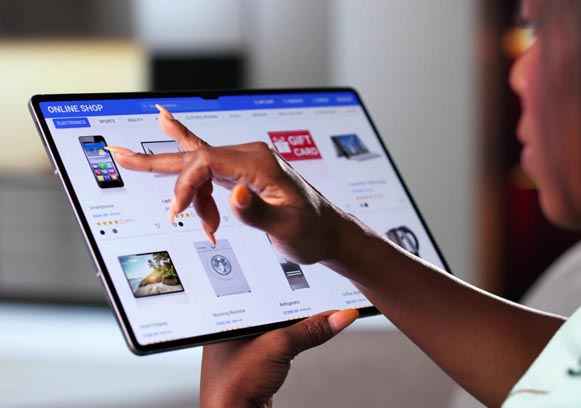
One of the most compelling advantages of e-commerce is its ability to transcend geographical limitations. Unlike physical retail, which is confined to a specific location, an online store can cater to customers across regions, countries, or even globally. This expansion unlocks new revenue streams and helps brands grow beyond their local markets.
Additionally, international growth doesn't require the same overhead as traditional expansion. There's no need to invest in multiple physical locations or regional distribution centers right away. Instead, retailers can test markets, measure demand, and scale strategically with minimal risk and upfront cost.
Improving Customer Engagement and Experience
The modern consumer expects more than just products-they want personalized, engaging shopping experiences. E-commerce empowers retailers to deliver customized content, product recommendations, and offers based on browsing history and previous purchases. These data-driven interactions make customers feel understood and valued.
Unlike traditional retail, where personalization is limited by in-store resources, online stores can automate and scale customer engagement. From AI-powered chatbots to dynamic pricing and personalized email campaigns, e-commerce platforms enable retailers to communicate with their customers more effectively.
Reducing Operational Costs
Lower Infrastructure Costs: E-commerce eliminates the need for multiple physical storefronts, reducing rent, utilities, and maintenance expenses.Lean Staffing Models: Automation and digital tools minimize the need for large in-store teams, lowering payroll and training costs.Streamlined Inventory Management: Digital platforms provide real-time tracking and demand forecasting, reducing stock waste and storage fees.Efficient Marketing Spend: Targeted online campaigns cost less and deliver better ROI than traditional media advertising.Reduced Transaction Overhead: E-commerce platforms automate billing, invoicing, and fulfillment processes, leading to administrative cost savings.
Leveraging Data for Smarter Decisions
In contrast to physical stores, where customer behaviors are more difficult to track, e-commerce provides a granular view of how users interact with products and content. These insights enable smarter merchandising, inventory optimization, and pricing strategies tailored to consumer preferences.
Data also fuels predictive analytics and machine learning models that help forecast trends, identify potential stockouts, and reduce customer churn. By tapping into these capabilities, retailers can outmaneuver competitors who rely on outdated or anecdotal information.
Ultimately, data-driven strategies lead to faster innovation cycles and reduced risk. Retailers who understand their data are better equipped to serve their audience, fine-tune their value propositions, and stay ahead in a competitive digital marketplace.
Staying Relevant in a Competitive Landscape
Consumer loyalty is no longer guaranteed by proximity or legacy branding. Instead, loyalty is earned through seamless experiences, consistent value, and emotional resonance. E-commerce allows for constant refinement of these elements through A/B testing, personalization, and customer feedback integration.
Digital-native competitors have disrupted traditional retail by being agile, responsive, and customer-focused. To survive and thrive, legacy retailers must adopt similar traits through their e-commerce strategies. The ability to pivot quickly and experiment with new business models is critical in today's retail ecosystem.
Furthermore, the rise of social commerce and mobile-first purchasing habits means that being online is not enough. Retailers must also be discoverable, responsive, and optimized for multiple platforms. Investing in e-commerce is a proactive way to future-proof a brand.
Conclusion: E-Commerce as a Strategic Imperative
Retailers can no longer view e-commerce as a secondary or optional channel. It has become a strategic imperative-one that offers opportunities for expansion, cost efficiency, and customer intimacy. From increased global reach to personalized engagement, the benefits are both tangible and transformative.
Those who invest in digital infrastructure, leverage analytics, and prioritize user experience will be better positioned to compete and grow. On the other hand, those who resist the digital shift risk becoming obsolete in a world that demands convenience, speed, and constant innovation.
As technology continues to evolve, so too will consumer expectations. The most successful retailers will be those who embrace this evolution and place e-commerce at the center of their strategy. In doing so, they won't just survive-they'll lead the future of retail.


Popular Posts
June 2026


Building a Community Online Without Feeling Overwhelmed
Creating and nurturing an online community can be a game-changer for .. ..
Creating and nurturing an online community can be a game-changer for small businesses. A strong community fosters loyal customers, encourages .. ..
READ NOW


From Milestone to Meh: The Strange Psychology of Wins
Successes and wins, whether big or small, are often anticipated as .. ..
Successes and wins, whether big or small, are often anticipated as moments of triumph and celebration. Yet, for many people, .. ..
READ NOW


How to Optimize Paid Advertising for Maximum ROI in 2025
Paid advertising in 2025 is evolving rapidly with the rise of .. ..
Paid advertising in 2025 is evolving rapidly with the rise of automation, AI, and increased data privacy regulations. Marketers are .. ..
READ NOW


Celebrating Wins and Planning for Long-Term Success
Recognizing and celebrating wins, no matter how big or small, is .. ..
READ NOW


Using Chatbots to Improve Customer Support and Sales
In the evolving digital landscape, businesses are constantly seeking ways to .. ..
READ NOW


5 Personal Finance Hacks That Make Investing Easier for Beginners
Investing can seem daunting for beginners, often clouded with complex jargon, .. ..
READ NOW


How Content Marketing Drives Long-Term E-Commerce Growth
Content marketing is the process of creating and distributing valuable, relevant .. ..
READ NOW

Using Marketing Automation to Streamline Strategy Execution
Marketing automation refers to the use of software platforms and technologies .. ..
READ NOW


Waste Not: Sustainable Product Design for Startups
In today's rapidly evolving market, startups have a unique opportunity to .. ..
READ NOW


4 Free Marketing Channels Every Beginner Should Try
Marketing is essential for any business, but for beginners, the cost .. ..
READ NOW


